USA SUIT & Hubris

Last year I finally cracked the top 10 at US national championships.

This means the world to me, and given the fact that I started long track at 31 (I’ll be 37 in January) it’s honestly as much as I can realistically achieve. This also earned me “Category I” status, and in the “unwritten ethic” among long track athletes, I now had earned the right to wear a skinsuit with the USA on it.

So since nationals I’ve been skating in an old, worn out USA suit previously owned by Marc Pelchat. If you have ever seen Marc & how he rips off the start line, it’s karmically appropriate.

But today, I got MY OFFICIAL USA CAT I SKINSUIT!

It’s bright red! Fast! and fits me like freckles, strong coffee & rock-n-roll.

Putting it on I was like an excited kid on Xmas morning. But was my giddiness unusual? Or do others feel the same way the first time they put on that USA that has taken such an incredible amount of work to earn?

So I asked around:

My first US skin was a long time ago, I got to the rink in Milwaukee for practice and Ryan had this big plastic bag of Cat I Nike stuff…

I was trying to be all old & mature about it, just all “whatever” but I wanted to put it on so bad, Ryan said “you really should go try it on, make sure it fits!”

So I ran downstairs to the bathrooms and put it on. I was probably 14.

I still have that skinsuit & I won’t give it up. It’s in my dresser at home.

-Tucker Fredricks

I was in Herenveen, in 1987, I got the whole National suit, and then I had to sign autographs immediately. No one knew me, but I had on the National team suit.

-Bart Veldkamp

It was a really long time ago, and I was very young, 13 or 14, but what I remember more than the skinsuit is that in June my father had made a bet with me that if I made category I at Junior trials in February he would buy me a whole package of Oreos!

After I made Cat I, I got home from school one day, and sitting at my place at the kitchen table was that package of Oreos.

I do still have that skin they gave me, it’s the old Mizuno one, and I will never throw it away. I have 2 of them, and skated in them for years.

-Ron Macky

The first time I got one was at a Short Track world team trials, and I put it on for that, and then I made the World team at that race, and got 2 more that weekend!

Wearing it, I did feel more elite.

-Mike Kooreman

I first put on a USA skin, it was at the Viking races in Holland, they let us borrow one, so I was all pumped, but then I found out I had to give it back. So that was disappointing.

Stepping to the line felt super cool though. Especially for me, because I did not have a team or team skin, so it was the first time I felt unified with something other than myself.

-Robert Lawrence

I remember I was so excited, but when the box came, it was a SHORT TRACK SKIN, they gave me the wrong one! They gave me a long track one eventually, I got 3 that year; it was a good year.

My dad probably has fonder memories of it than I do, because everything in the box arrived in his size, I was less than 100 pounds when I first made Cat I, and everything was a men’s large. So he got to try it all on & wear the US speedskating collared shirts & T-Shirts.

-April Medley

I remember when Mia got hers! she wore her stuff everyday, and I mean everyday! It did not matter, she wore it to school! She has a good story.

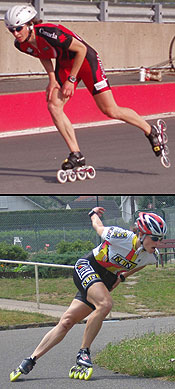
I was probably 13 or 14 years old, I went to Australia for junior world championships in Inline, and they had only selected 2 juniors for the whole country.

Me and my friend Brant Jagel from Florida, we grew up together & we were the team + 2 girls too. I was 13-14 and suddenly going across the world, it was pretty cool.

I still have that skin from that Junior team, my mom still has everything that I have used. I sure could dig up some fun stuff out of the woodwork.

-Chad Hedrick

First of all I couldn’t get it quick enough! They took forever to give them out, I remember when I saw the boxes right by the door and I saw my name on one of the boxes. And I couldn’t get into it quick enough, so we got them finally, I cut open the box and threw everything on right there!

I got yelled at & made fun of for wearing all the gear the first day I got it, but I didn’t care, because it was so awesome!

-Mia Manganello

I remember Olympic trials in 2005, and they let everyone wear a fast USA suit so everyone would have the same suit. I remember how excited I was, I could have been given $1,000 and I would not have been more excited.

I was running into the bathroom and trying it on, and thinking wow.. wow!! I remember that specifically, and even now, still, whenever I get these packages in the mail, it’s like Christmas, like Christmas has come early.

Anna Ringsred

These stories need to end with another story-

So I am out there on the ice this morning, in my new blazing red suit, skating super solid & feeling quite studly.

Of course it’s in moments like this when the hubris hammer appears to remind you, DON’T LET IT GO TO YOUR HEAD.

I have been doing a LOT of short track, and it’s changed my corner mechanics significantly. So today when I try to go really fast, two steps into the corner I lean so deeply my boot touches the ice (it’s called “booting out) & my blade loses contact-

Suddenly I’m falling-spinning-sliding at the pads, I’ve got about 2 seconds to freak out & holler at a whole crowd of National allaround team members lined up like pins

and I’m the massive red bowling ball of season-ending doom!!!!

I see a pair of legs, flashing scrambling gold maple blades that seem to jump just as I impact.

WHAM!!!!

I missed Pat Meek by a hair, it felt like he almost jumped over me!

From Pat’s viewpoint-

Out of the corner of my eye I saw a flash of red, I looked back and you were coming right at me, and I have never moved so fast on clap skates in my life!!

I had looked down right before the crash, and my HR was at 140, about 3 seconds after the crash, someone said “hey, check your HR” and it was at 175. You definitely scared the crap out of me!

-Pat Meek

Sorry Pat….. No one knew you could jump so fast, you could be a good sprinter!

I hit the wall hard, but the pads did their job and I’m totally fine, the suit is ok too, however my left Viking blade is pretty messed up!
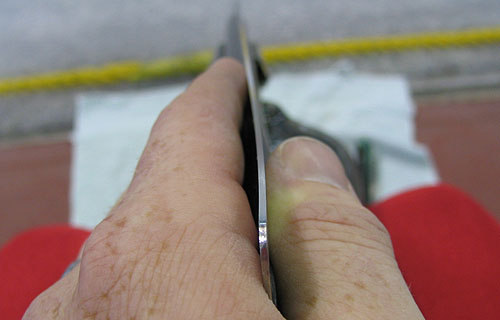
I got this messy bend out, but the blade itself, although straight, is now corkscrew twisted one way in the front and another in the back. Hmmm….

Oh well, blades can be replaced, but the important thing is that no one got hurt, the fact that it’s a good story, and got me asking others for their stories, is gravy…

Hammertime Crunch

To Hammer, Hammering, Hammertime-
Definition: informal. To keep at something continuously: hammered away at the problem.

“Hammering” is a wonderful phrase, and in the athletic usage, really signifies an internal psychological state manifesting itself in external, usually quite noticeable action.

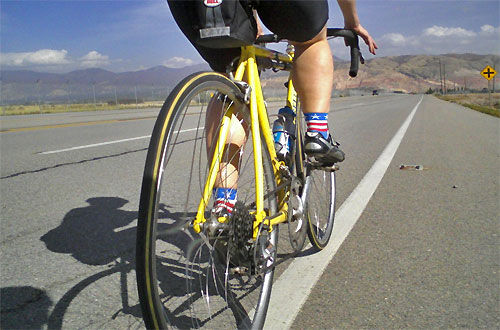
Jessica must have eaten a bowl of Hammertime Crunchy O’s for breakfast, because we went out for an “easy spin” together, and she went into big-ring-determined-hammer-into-headwind mode.

The distortion from my el-cheapo camera phone makes it seem as if she is simply ripping spokes right out of the wheel! Go jess!

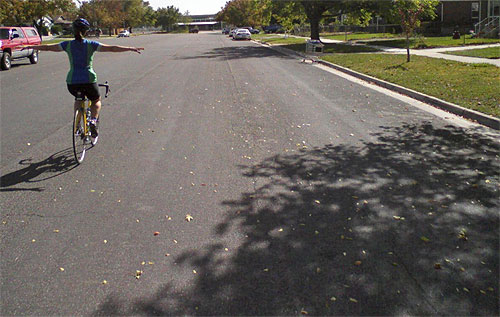
I never imagined the woman I married would get into cycling & enjoy “hammering” like that, but life works in strange & wonderful ways. Goofing around near the end of the ride, you can see the first leaves of fall skittering along the road. The highest of the Wasatch have already gotten snow, it was a nice day, but winter is not far away.

As per my usual habit of defining what I am bad at, and hammering relentlessly on that, after some recent disappointing racing- I’ve decided I need some “speedskating boot camp” to improve my turns.

That can only mean one thing: Short Track!

It’s been 3 years since I’ve crunched my way ’round the small, padded circle- but wow, where I used to be terrified, now I am having so much fun!

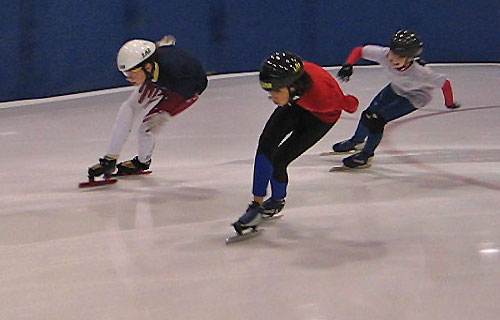
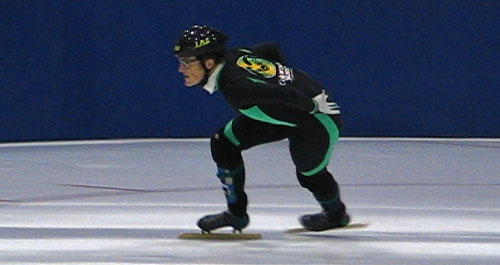
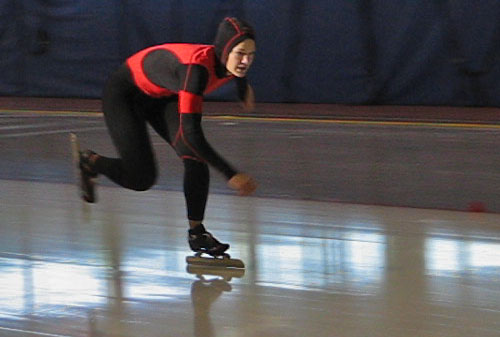
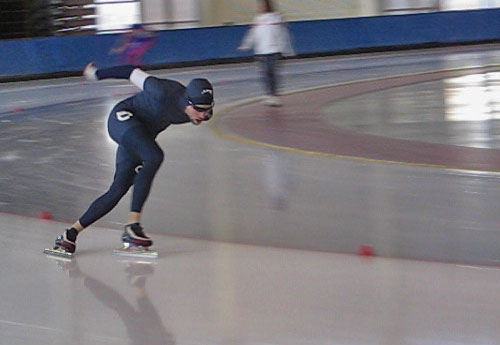
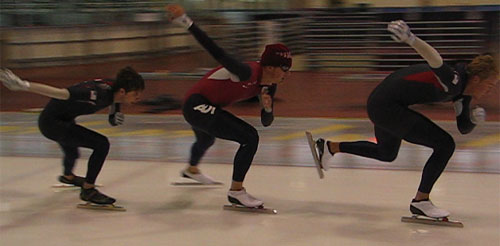
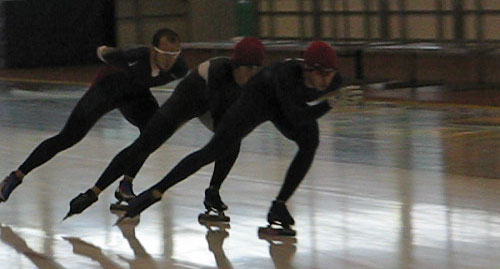
Here are 3 of the kids from the Wasatch Club, flying.

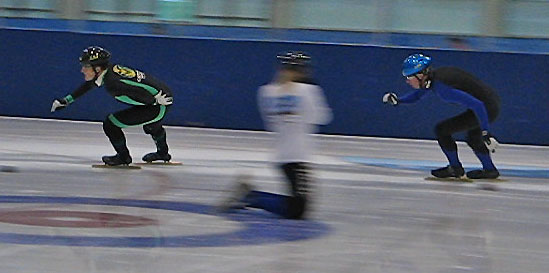
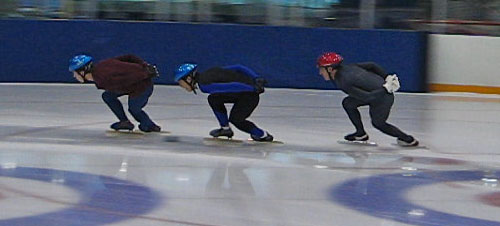
This is me, a model of powerful & total inefficiency, leading Michael Drews, the blond blur taking pictures between us is Teri Willingham, her awesome photo website is here, including excellent photos of this practice & last weeks LT time trials. She blogs too.

Every technical flaw I have is magnified in those unforgiving, high G-force turns.

Watching those with refined, compact power is awesome. Here are Chris Dahl and Jonathan Valdivia followed by Guy Thibault, the High Performance director of US speedskating (he was an Olympian in ‘88 & ‘92, has a PHD, and can still really go!) .

Note the distance between their legs in this push as compared to mine… I’m reaching too far, and because my knee is not compressed when it touches the ice, it doesn’t create pressure immediately. Long track is no different in this respect. My shoulders are too high as well.

The US national short track team trains at the Utah Oval too, and I’ve occasionally meandered over to watch Apollo & company blaze along, the sounds of their blades ripping through turns can fill the oval like revving motorcycles.

They are absolutely, outrageously, inspiringly, FAST!!!

10 things about the Netherlands

I’ve been home for two weeks, and have a few reflections about the trip I recently took. I wrote this post mostly while in Holland, but only organized it this past weekend.

International travel is an essential thing for Americans to do. Even though we are a culture profoundly in love with the “road trip,” America is a very isolated country; -isolated physically, socially, intellectually, and emotionally, from much of the rest of the world.

So here are a few thoughts-

10. “God made the world, but the Dutch made the Netherlands”

This local saying is historically accurate, because of the 15,000 square miles of the country (it’s about the size of new jersey) over half has been reclaimed from swampland and the ocean.

There is a constant struggle with/against the water that defines foundational Dutch culture. The Dutch claim that they are resourceful because they “…are always fighting the water.”

Maybe speedskating is part of that triumph over water, it’s the moment where this tremendous threat, becomes something they can walk & even fly across.

Needless to say, global warming has the Dutch a little bit worried. They call the land they have reclaimed from the sea “the Polder” and its VERY lush, green, and pretty.

9. Wooden Shoes & Windmills
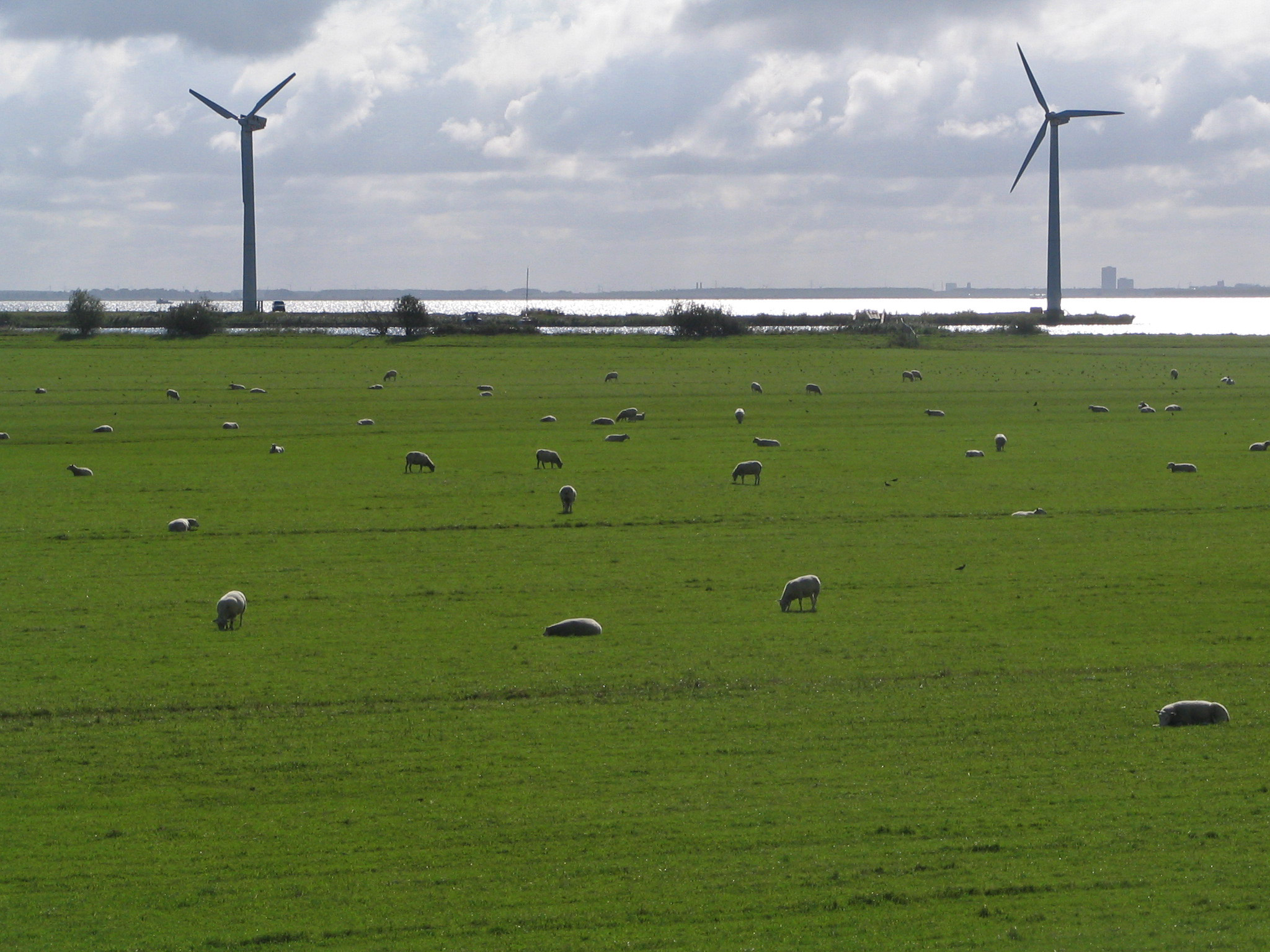
Really, these popular icons mean something else entirely. They are not cute, they are symbols of the constant fight against the water.

The windmills are running to keep pumping water out (modern ones are generating electricity for pumping stations). And wooden shoes are cheap, waterproof footwear for poor farmers, the upturned tip helps them not sink into the mud.. Also, coincidentally, they provided a nice hard surface to strap an iron blade onto.

Translation for the non-dutch-
Wooden shoes = Steel toed workboots for tough farmers.
Windmills = insurance against your real estate investment/house having it’s value washed away in an instant (As the American housing market crumbles, I wish I had a windmill proof against this rising tide).

8. Bike Paths
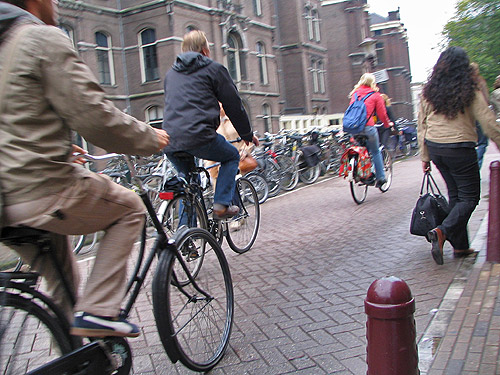
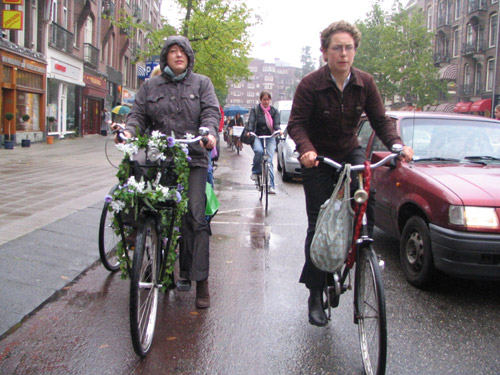
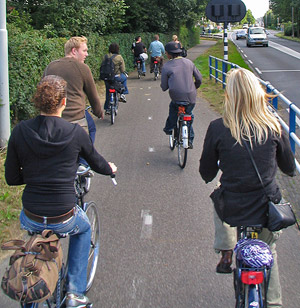
Holland is about 250 kilometers long and under 200 wide, and somehow they squeezed 6,000 kilometers of bike paths in there. It’s a cycling and (when its not raining) inline skating paradise!

From bankers to grandmas, fashionable hipsters to blue-collar workers, children & junkies, everyone rides an old, beat up cruiser in every weather condition.

Bikes RULE the streets. Cars & even the massive trams give way to the swarms of cyclists

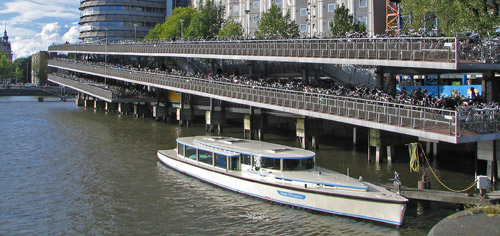
Here is a bicycle parking garage near central station, downtown Amsterdam. 3 floors, thousands upon thousands of cheap cruisers. The boat is also mass transit!

In the past 10 years, car ownership has quadrupled, and massive traffic jams between cities are becoming normal. However for inter-city transit, bikes still rule.

7. Amsterdam Canals at night
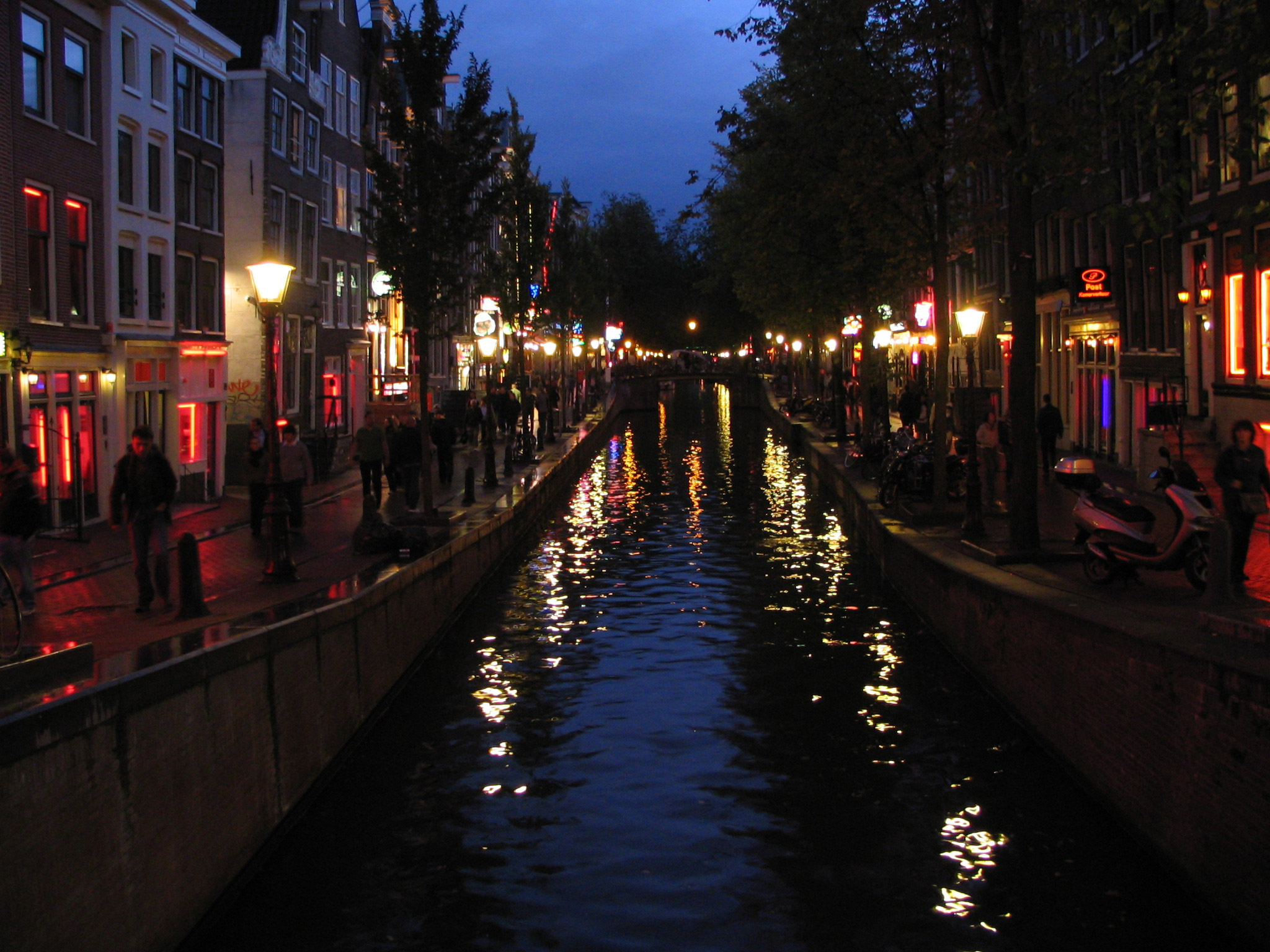
A quiet, rainy evening, full of pedestrians & beautiful lights on the water, click for a larger image-

A discerning observer will notice the red lights along the windows on the sides of this picture, and these signify the legalized prostitution of the red light district. The women stand in the windows & beckon to you, if the curtains are drawn, they are “busy.”

It’s a little shocking for people from sexually repressed cultures (like, umm… America) to see this.

Lest my fellow Americans get all indignant & huffy, look in the phonebook of ANY American city, what the heck do you think the “ESCORT SERVICES” section is?

This is just how our culture does the same… exact.. thing…. In every society, there will always be women who sell sex & men who buy it. How it’s done is just local detail.

6. For George’s Wife
I did this brief video for people to see the awesome inline skating that can be done along the shores of the inland seas (the Iselmeer). I did this video for George’s wife, who has never seen her husband, a 3 time elfstendentocht finisher, skate. George is in his 50’s, and can still really motor along. (click here for the quicktime)

The music is a local drinking song, about a father, a son, the ocean, & loss. It was recommended to me by several Dutch friends, they say it’s one of those songs that make people sway, sniffle back a tear, and sing at the top of their lungs.

5. Pannenkoek

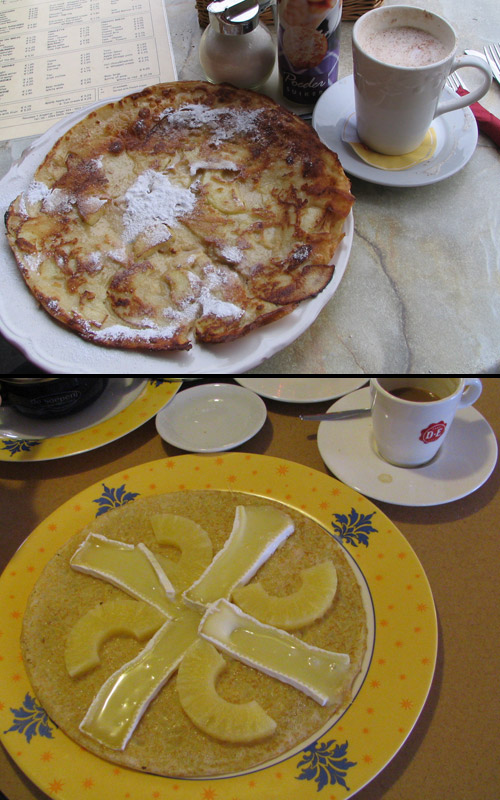
Definitely in the category of “yummy beyond all comprehension!” we have an apple sugar Pannekoek, and then a Brie & Pineapple!!!

Why did this trip so center around food? It must be all that endurance work I did this summer, it made me hungry!

4. The Elfstedentocht
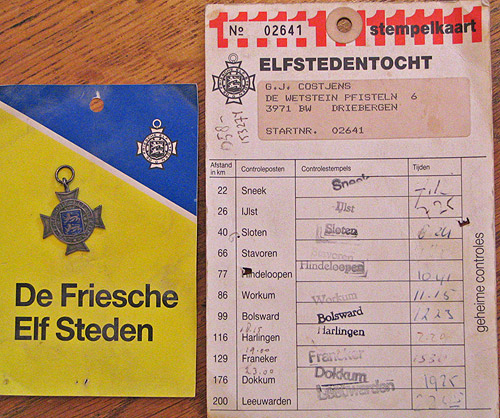
Translation to Americans: To have finished this 200 kilometer race is like having been allowed to play in the Superbowl. And a Superbowl that only happens roughly once every decade or so.

Here is Jules’s timecard & finish medal. You pass through 11 cities, and get a stamp at every city along the way. Even the leading pack does this, and if you miss a stamp, you are DQ-ed

3. Overheard…

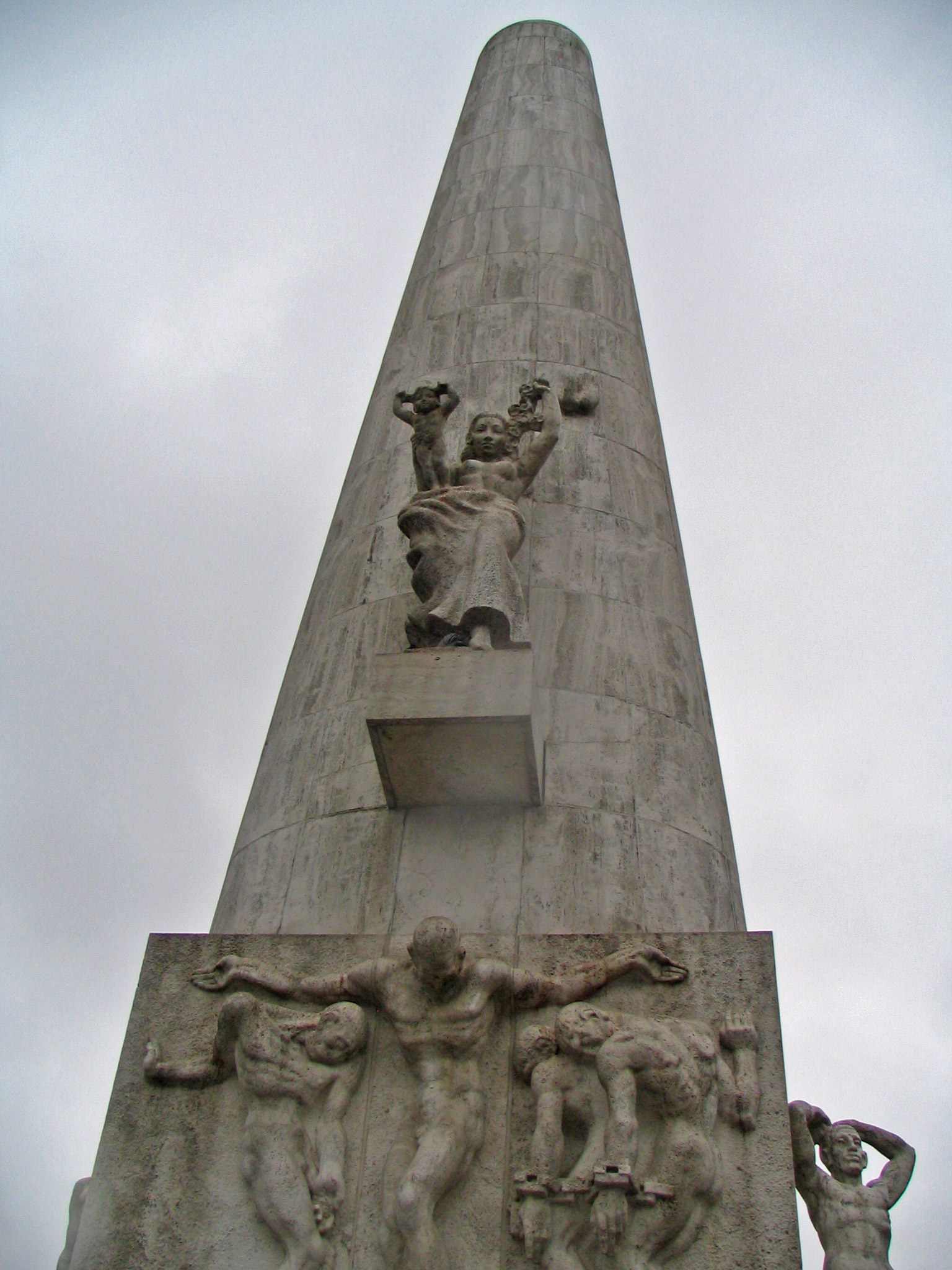
While taking the picture of this monolith to the right, I overheard some Irish tourists, having an absolutely screaming argument behind me. I will never forget what one young woman said (imagine this said in the thickest Irish accent you’ve ever heard)-

“We are not in bloody Dublin anymore, we’ve been in Amsterdam for DAYS, and I haven’t had one f***ing joint yet!”

We met quite a few folks from the UK who were over in Amsterdam to sample these “coffee shops” that don’t serve much coffee at all (including a really neat couple in their 60’s Jess & I had a lovely chat with over a pint of Belgian beer).

2. Raw, Pickled Herring
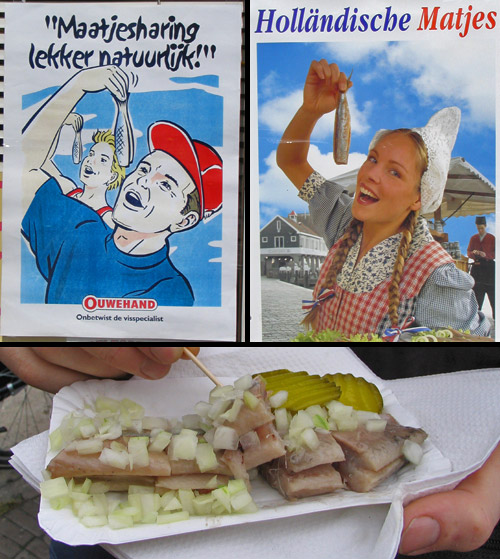
My father has a rule, “If there is something on the menu that scares you, this is what you must order.” I have had many interesting meals following this rule, and this local delicacy was quite tasty.

Raw herring is basically Dutch sushi that makes your breath smell like gasoline for a while.

But a son never truly tops his parents. My mom & dad are in Italy, and emailed me that they ate sea urchin roe and spaghetti!!! I am both disgusted and jealous at the same time.

1. The Anne Frank House
Just go and see it. It hurts. A lot. Go and see it. This picture is the water in the canal, reflecting the house, on the day I visited.

The central message of this house is not the past, it’s the future;

The Anne Frank House is there to remind us that Fascism does not always wear a swastika; Fascism adopts local customs & cultural camouflage.

Claiming to be the super-patriots & the most true to heritage & country, fascism is about hatred & fearful disgust of people who are different. Religion, ethnicity, language, sexual preference, anything that is used to leverage a “cult of personality” by a few individuals who use a fearful, downtrodden public for their own machinations, -that is fascism.

And fascism is what murdered Anne Frank, and this is what a civil, decent, open society that truly believes in “love thy neighbor” must fight tooth and nail against, exposing it for what it really is.

I did not mean to end this entry on such a down note, because I loved the Netherlands, and want to go back, especially when I will have a chance to skate ovals that have pacelines so long, they meet in one long mobius strip of churning athletes.

But sometimes living in this world means seeing awful things with open eyes

Picture, video + a Muscular Quiz

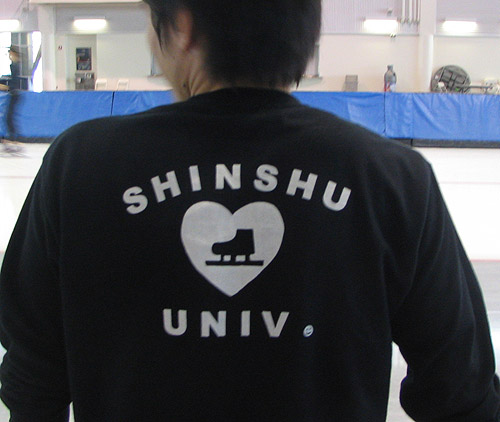
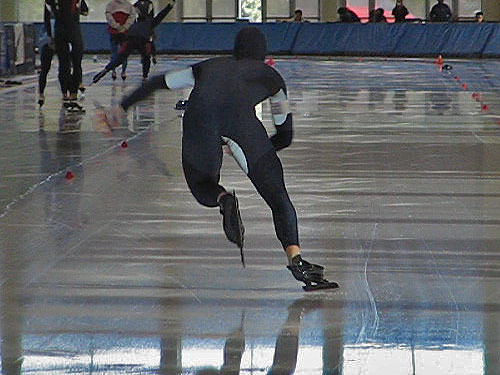
1. Here is a photo I took at the oval a few days ago of a Japanese university team skater training at the Utah Oval-

They love their speedskating! and I really enjoy watching them train. I wish there was less of a language barrier.

2. For a project I am working on (unconnected with this website) I followed the national allaround team for a lap as they wound up to speed. They were doing multiple 29-30 second laps, that’s roughly 30-32mph (50+Kph), and I shot some interesting video.

This is the closest I have ever come to visually documenting what long track at speed feels like (a 25 second lap is quite insane from this perspective, someday I will capture that on video, if I can ever go that fast again!).

This was in the middle of a long set of these fast laps, so the skaters were already tired as the clip begins. I added in a slow-mo bit of the fast parts, so you can really see the push direction, corner rhythm flow, and control. These guys can REALLY skate!

It’s worth noting this is not even close to their top speed. Liam Ortega is leading, then Pat Meek in red, Chad Hedrick, John Loquai, and Ron Macky is last in line wearing all black & enjoying the considerable draft created at this speed.

Start the YouTube below, or click here for the quicktime.

I really need a helmet cam, going this fast his while handholding a camera is difficult, and frankly, a tad bit dangerous. Also I tend to not breathe as I try & hold the camera steady.

It’s hard to skate very far without breathing (even for an already distance-challenged sprinter!).

3. I’ve got a nasty “owie” that hopefully does not develop into an “injury”. And it’s in an interesting spot.

First of all, I hurt this muscle doing VERY intense off-ice turn simulations, & the muscle that I hurt performs this function according to wikipedia:

The action is primarily to lift the upper leg towards the body when the body is fixed or to pull the body towards the leg when the leg is fixed.

that second half sounds like a turn, doesn’t it?

Can you guess what muscle I hurt?

Here is a hint, I’m quite sure speedskaters have VERY developed versions of this muscle compared to the rest of the population, and in average people it’s about the thickness & length of your forearm.

Guess again…..

Scroll down for the answer

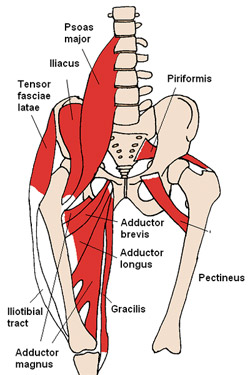
Ok, I admit it, this is a trick question, but a fascinating muscle to understand. I am fairly sure I hurt the upper part of my Psoas major. It lies inside the ribcage, and connects from the inside of your spine into the lower pelvis.

This is a trick question because despite its size, you can’t see the Psoas, at all, it’s completely internal.

I never knew about this muscle until I looked at the actual human dissections at the Bodyworlds III exhibit in Portland. The Psoas is HUGE, and so essential to what we do on ice or wheels (or standing up, for that matter) -when it’s hurting, skating in a powerful position really stings.

The quadriceps get all the attention, but just like the unheralded & virually unknown Piriformis, the Psoas is one of those little essentials in the magical symphony of hip flexors that keeps a skater going.

note: this feels like an “owie”, not a true injury, a bit of rest, minimal intensity, and I should be ok in a few days.

Sept 22nd time trials

Here are a few notes & images from this past weekend’s time trials (results are here at DESG).

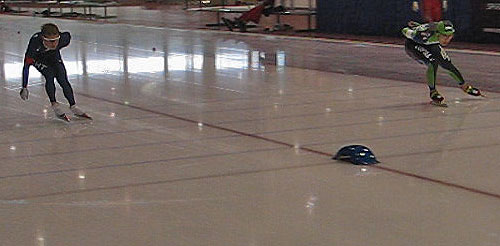
Stephanie Combs, the subject of an earlier post, just missed qualifying for US nationals in the women’s 500m by .17 of a second. You can see here the light very slightly coming through under the front of her blade.

If you look very carefully in certain side-lit pictures, you can see this as proof of where an ice speedskater’s weight needs to fall on the blade during the glide. It’s sooo different from wheels.

Keith Carney, ripping along about half-way through his 1500m. This is the split second before Keith’s right foot touches the ice. You can clearly see the pressure, push direction, & length of his left foot stroke.

The moment of COMPLETE left leg extension is the best for pictures, because it’s pretty, but studies show the maximal pressure that makes you fast happens much earlier in the stroke, like right here-

(to be more exact, I’ve heard of studies showing that good skaters & elite skaters might have the same maximal recorded pressure, but for an intermediate it’s a brief moment, for the elite, their technique creates high pressure from very early in the stroke till almost the end of the push).

A very wonderfully odd race was run. Two of the best 500m skaters on the planet, World Cup champ Tucker Fredericks and former 500m world record holder Joji Kato, were paired together for a 3k.

This was just for technique & training, as you can see by Tucker’s hair flying in the wind.

& this is me, roughly 2 seconds into my new season.

This is one of the only video frames of the 500 & 1500m I raced that looks even remotely like speedskating. I raced like an inefficient pile of inflexible, spastic garbage & I am quite pissed off.

It’s too early in the season to care much about times (and I don’t.. too much….) but my execution in both races was terrible.

What’s really weird is that last season, all summer I lifted weights like a freak, did sprint-centric short duration plyometrics & dryland, & raced a 2:02.52 1500m during my first race weekend.

After this year of mega-endurance inline & cycling. I step to the start line 10lbs lighter & feeling like a completely different athlete, & race an almost identical time (2:02.08), with almost identical lap splits.

Maybe….. this…. is….. just… what… I…. am……

September Determination

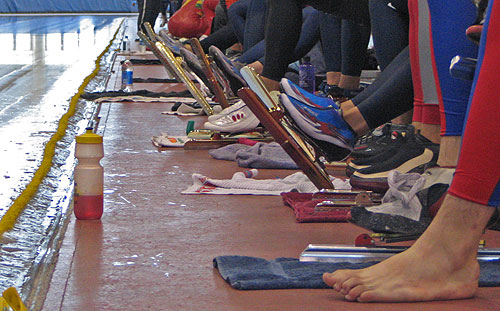
Waiting to go on the ice are the skates of the national team sprinters, allarounders, a Japanese University Team, & the oval’s F.A.S.T. team.

This picture was shot during a mid-session resurface. I think many are unconsciously holding their skates this way because their legs hurt, and straightening them fully helps.

Late September is the hardest training time of the year; it’s when speed meets volume for elite athletes, and it’s a make or break month for some. I love it and dread it.

The sprinters especially had a horridly hard day-

Here is Tyler Goff, Nick Pearson, and Mike Stein. You can see something in how far back their hips are & the curl of their back in this photo that I have a very hard time doing properly.

Extention & form! even when it’s the end of the day, your legs are a burning mass of jello, and what keeps you upright is determination + years of hard-earned fitness, as shown here by Kreg Greer, Matt Plummer, and Mike Blumel.

When it’s a world cup race, or national championship time in December, this is when the efforts of September will bear fruit.

The “Book of Meaghan”

Meaghan Buisson is an elite Canadian inline speedskater & the women’s solo marathon world record holder. She has won marathons racing in Europe, and like many talented inliners, is now is focusing her considerable mental and physical horsepower towards the goal of Vancouver 2010.

I also happen to think that she is possibly the best skater/writer I have ever come across. Her control of language simply blows me away.

I write like a determined carpenter, Meaghan is more like a concert violinist, & you can feel her soul playing out during the concert.

Due to its often intensely personal nature of her style & some of the demons she wrestles with she does not publish her work on her website, or even beyond a small circle of people.

But I urge her to someday make a novel out of it (I jokingly call it “The Book of Meaghan”), as that fits her style better than the daily carpentry of a blog.

Or she could find a Canadian news outlet that is interested in paying athletes who have skills far beyond merely skating freakishly fast in a circle. What does it feel like to be a Canadian Olympic hopeful? She tells the story amazingly well.

Meagan will be really easy to recognize during races in Calgary this season, even if you don’t remember her face from these pictures;
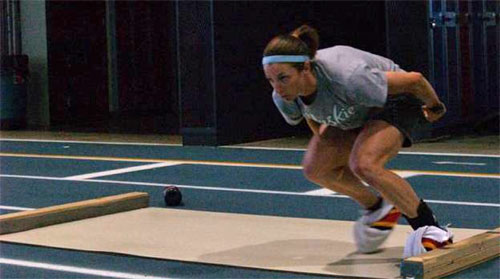
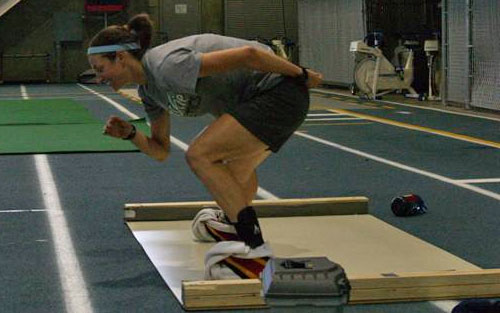
Just look for the skater with the huge ankle brace built right into her boot. She is skating with several ligaments missing. THAT is determination.

This is something she wrote back in July:

We started back on ice last week. Or, rather, my group started back on ice last week.

My skates are currently in Montréal, where Mathieu Turcotte (ApexRacingSkates.com) is making me a carbon fiber ankle – integrated into my actual boot, so I can go around corners with my current (and permanently) wobbly ankle. There is some question as to whether or not this venture will be successfully. As Mathieu said when we met a few weeks ago to go over the options, “They didn’t teach me THIS in school!”

In light of limited alternatives, I’m willing to take the risk…

But until my boots arrive I can’t skate.

So while my teammates are slowly building up distance, working on drills, and gliding around with the Oval with contented smiles on their faces, I’m passing hours of mind-numbing cadence gliding back and forth across a slideboard.

Two minutes on… Two minutes off… Two minutes on… Two minutes off…

I’m still smiling though.

At some point this season, two minutes will be a thoroughly decent 1500 m race!

Top Blade

Every July, the Olympic Oval is over-run by the future.

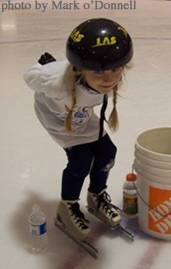
In a weeklong series of skating camps, a couple hundred kids ranging in age from five through thirteen+ years old converge in mass upon Calgary and promptly turn the predictable rhythms of Oval life completely upside down.

During these weeks, many Oval athletes (and coaches) tend to become somewhat bitter, hiding from the masses, doing programs away from the Oval or muttering to themselves when forced to train indoors as children disrupt programs by jumping across training mats, slideboards, and cables in a never-ending game of tag.

As one of the Oval coaches finally exclaimed in exasperation during imitations last week when about ten impish children tried to mimic his skaters, “Don’t talk to them! You’ll only encourage them to stay!”

Ummm… isn’t the point?

Training at the Olympic Oval during Top Blade is like being overrun by a litter of puppies – you have to watch where you step, but even when they’re causing trouble underfoot, they’re just so darn cute it’s hard to stay mad!

I personally love training through Top Blade.

It’s so easy to become jaded and cynical out here – training hard every day without thinking about life beyond the tightly controlled and artificial world of long track ice. The Olympic Oval places long track speed skating on par with the gods. For the most part of the year, skaters are revered based on numbers, in a sport defined by words such as “serious… competitive… genteel… tradition…” There is a definitive *way* things are done at the Oval, as steeped in tradition as any rational logic, and very little seems to sway that path.

But Top Blade kids don’t know that. And thus wreaking havoc while descending upon the Olympic Oval in one collectively screaming bundle of hyperactive energy, they promptly knock the Olympic Oval right off its pedestal, trampling all sense of humourless propriety wildly into the ground.

There are few times in my life when I actually like chaos. Top Blade is one of them.

Throughout my athletic career, I’ve raced everything from grassroots competition right up to major international multi-sport games. I love watching really good athletes perform their sport, and stand in awe at some of the feats of athleticism I am privileged to now see each day.

But for everything for which I’ve been blessed through sport, there is nothing little more motivating or wonderful to watch than little kids simply having fun on skates.

Happiness is a group of eight-year-olds scampering around the Oval, eager to skate, excited to learn, and celebrating movement every day. Motivation is watching the littlest kid at the camp – an impish five-year-old - skating wobble-kneed about the Oval for the first time, fall down, stand up, then keep going with a huge grin across his face. Wonder is seeing a group of teenagers stop dead upon walking to the Olympic Oval for the first time, look about in incredulous delight, then exclaim, “This is, like, SO cool!”

Because they’re right – it is pretty cool.

And having them around to remind us of that fact, if only for one week each year, brings as much to us as anything the Oval can possibly provide to them.

Skate like a child. Love what you do. Play.

Viking Factory Tour

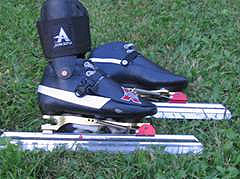
Over the years I’ve owned almost every kind of blade there is, Bont, Maple, Zandstra, & of course, Viking.

Somehow, no matter what I try, I keep coming back to my trusty Vikings. They are like a pair of comfy shoes that I skate quite fast in. On ebay last year I bought a pair of classic Viking sprint specials, and they are so much fun to skate on (slower than a clapskate, but fun).

I mentioned to my host, Jules, that I’d like to visit the Viking Factory, to see the place my blades were made.

Ignorant American that I am, I did not know that they don’t give public tours. But Jules is resourceful, and made several phone calls. Because of this website, and my connection with Dimon Sports (John has been a big Viking customer for many years), he was able to arrange one! Mazzel Jules!!!

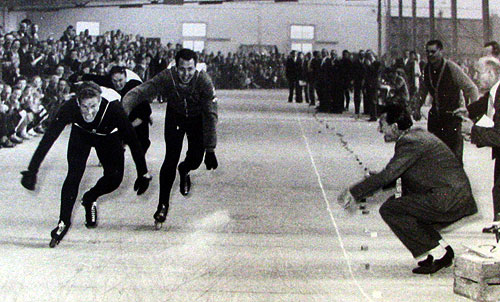
Oddly enough the first photo I see walking in the door is inline racing!! These guys are racing on 2-wheel Viking skeelers in the late 1940’s . The combination of wheels & ice has gone on for a long time!

Henk, Simon, and Bianca were wonderful hosts, and I saw many things that I’d like to relate about the largest speedskate manufacturer in the world. The first room I saw was their “Hall of fame” containing the following bits of skating eccentricity.

The VERY FIRST clapskate from February of 1985, note how there is no true pivot, the boot itself flexes.

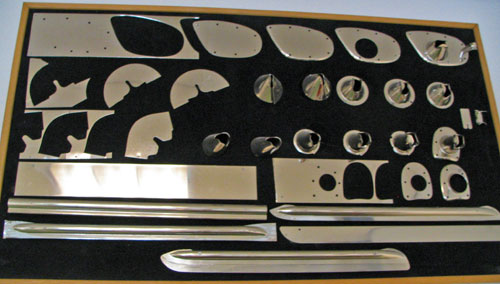
The different stages that metal is cut, shaped, and folded to make an old-style hardtail Viking skate.

Olympic 10k gold medalist Bob DeJong had his old Vikings turned into a pair of dancing shoes for his moment on “dancing with the stars”.

A computer in your skate? Actually this was a mechanism that Viking built so you could use a toe-start, & use the superior pressure of fixed blade for the first few steps, then after a set amount of time it would release to a clap-skate for the rest of the race.

The ISU banned things like this, but the prototype lives on. I wonder if it uses Mac or Windows operating system? (probably Mac! fewer crashes! actually the viking blade straighter machine runs on ancient MS-DOS!!)

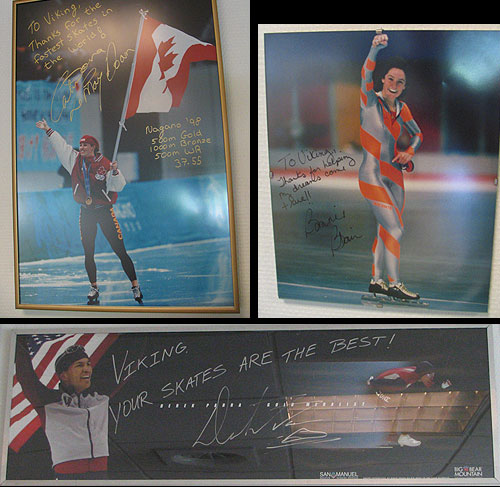
There was poster after poster of signed Dutch & German world champions; among them were these fast North Americans:

After the hall of fame, we went into the very heart of the factory & saw every step in the blade life cycle.

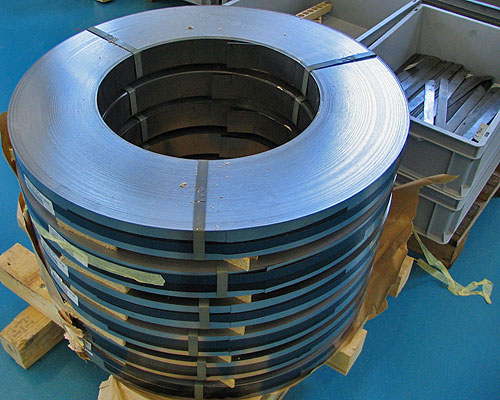
All blades start out on this massive roll of flexible steel, and then are fed through a machine that stamps them into blades, you can see a bin of them behind the spool

Then they have the tube welded on, and are sent to the Viking blade robot. It needs no breaks, no vacation, has minimal healthcare needs, and if you have bought a pair of top Viking blades in the past 7 years (roughly 50,000+ blades) this fella has handled them.

You have seen the robot in action in my previous post-

Although some of their boots are made in China, and some in Romania, there is lots of activity by guys in blue jumpsuits.

After the blade construction facility we were led upstairs to a room that was off limits until very recently.

About 5 years ago, Viking must have realized that with custom boots becoming more & more common, they had to get into the custom boot game if they were going to continue being a “skate” company, instead of just a “blade” company.

Only in the past 2 years have they even allowed folks like me into their upstairs room where they make them.

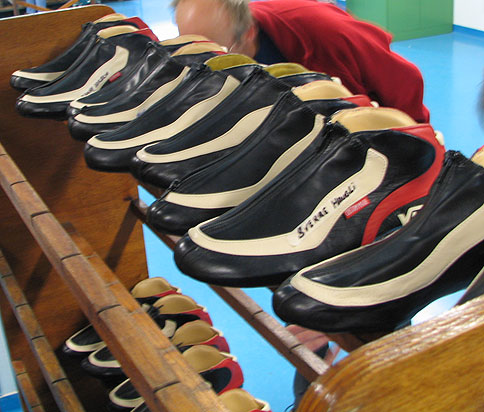
Here is a rack of boots for the German National team, although the only name I can read on them is Sverre Haugli, and he is an elite Norwegian Allarounder.

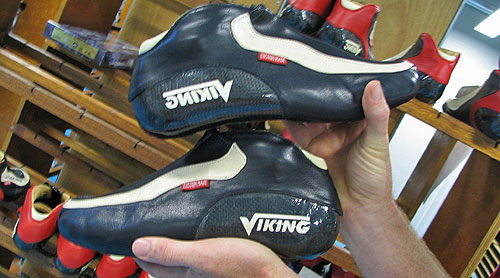
Here is a set of boots for Jan Bos, what I would give for just a few moments to skate as smoothly as “the catman” does. Will world cups be won on this boot?

As customs go, these boots have a radically different philosophy than most North American customs. They were not that stiff or freakishly light. They were built with “ice feel” being paramount. Viking believes that a boot needs some inbuilt flex to feel the ice (Van Horne’s flex a little bit too, same idea), this is quite unlike my SS customs, or a Marchese, that are so stiff you can almost skate short track on them.

Note that one of the logos on Bos’ boot is printed backward, they gave some long convoluted answer about the one facing the TV cameras being correct, so that is why the one on the other side is backwards. I’ve noticed almost their entire lot of customs look like this.

They save the foot castings of everyone they do boots for. This is their WALL OF FEET. Just for the completely skate-crazy fans out there, click on the image and you can see a full size version, you can read many of the names on these boxes.

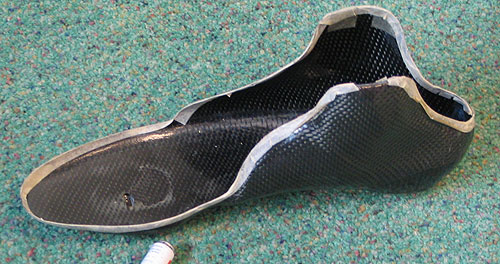
For Eric Gee in toronto, just starting out on making customs, I thought you would appreciate this larval custom boot.

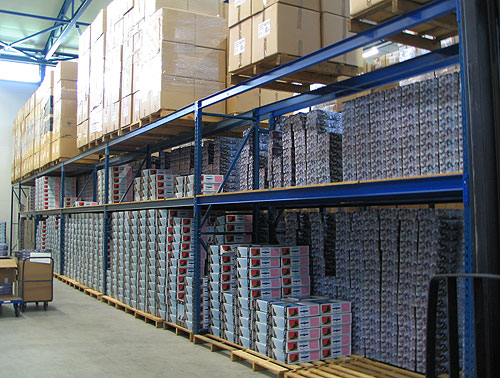
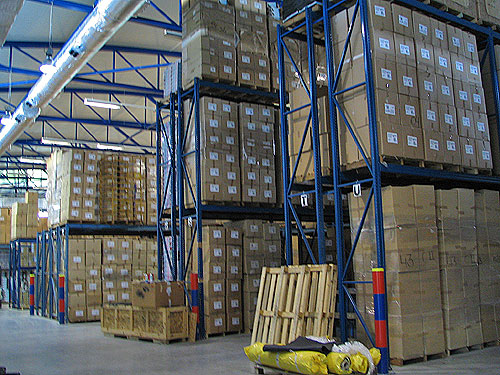
Back down the stairs to their warehouse. OMIGOSH! THAT IS 100,000 SKATES!!!

These shelves were truly endless-

There is a weird secret to the Viking factory in these shelves-

On a normal year, they will sell 20-30,000 pairs of skates. But in a year where significant natural ice covers the canals in Holland, they will sell over 100,000 skates!

You can’t just make that many skates all at once, so they have them in stock. Just waiting for the canals to freeze, and the Dutch public to go crazy again.

The Dutch wait for ice like skiers wait for snow, and you can imagine how this company feels about global warming!

And how about these littlest Vikings? They look warm & comfy & like I would have put stickers all over them if they had been mine

If you are looking for breaking news from Viking, I think there are 2 things worth mentioning, that are not commonly known.

1. Viking will be releasing a brand new short track blade in a few weeks. They used to have one some years ago. But this is a whole new design. The first prototypes should be in John Dimon’s hands soon.

2. Viking has been doing experiments with heavier skaters using slightly thicker blades in certain conditions. Their PM 1.1 blade is an example of that, and it’s a blade that already has world records to its name. They found that depending on the size, power & style of the athlete, on “warmer” indoor ice a thicker blade has better feel & speed. Lighter athletes or hard outdoor ice are best served by the standard thickness (or thinner). They also are making their 1.1 mm thick blades by starting with 1.3 mm steel, and grinding it down.

Whoa, this post has gotten long. Again, I want to truly thank Henk, Bianca, and Simon, for being wonderful hosts. (when I arrived, Bianca knew John Dimon & I are Diet Coke addicts, so guess what she had waiting!)

I’ve always known Viking blades as a “thing” now I know some of the good people who make the company work.

For my Father, who loves Trains

This following video has nothing to do with speedskating.

I associate my amazing Father with many things, trains are one of them.

We keep talking about taking one of those cross country trips together where you sit in the bubble-top Amtrak viewing car & talk about life as the country slowly rolls by

While in Holland, Jess & I took a train trip from Amsterdam to the Ocean (to Zandvoort aad Zee) on a blustery, spitting rain, sad-mopey weather day.

Sitting in the train as the drenched countryside scrolled by, I felt overwhelmed with missing him. A side effect of my choice to pursue speedskating is that I live 2,321 miles away from my parents, and don’t see them very often. It hurts.

This video is a small effort to show him how I feel; Dad, you are the best, let’s do that Amtrak trip sometime soon. Ok?

Click here for the quicktime, the YouTube is below.

Music is Pink Floyd’s song “Wish you were here”, but covered in amazing style by the
“chamber-rock” trio Rasputina.

Amsterdam Friday Night Skate – By Jessica

Andrew has invited me to make a post on his blog, and though I am his wife, it is a privilege nonetheless.

The reason he encouraged me to do this is because I went wild for the Amsterdam Friday Night Skate (FNS). I’ve done the Salt Lake City FNS before, which is great fun with a small group of friends.

But this was different – even though it was small by Amsterdam standards, only 150 people or so, it felt massive to me. We were a pack of friendly night marauders, sweeping through the streets and parks and canals.

For those of you who have done big skates like San Francisco, St. Petersburg, or Paris, this is old news, but to a newbie like me, the inner workings of a big FNS are pretty cool. The organizers of the Amsterdam FNS pick a different course every week and scout it out the Wednesday before. They’ve just celebrated 10 years of doing this.

Amsterdam FNS is sponsored by an in-line company and a local youth hostel, and the money goes towards the flashing vests, traffic-directing batons, and walkie-talkies the organizers use.

There are blockers who stop traffic so we can just cruise through. We do stop at certain red lights, to let the stragglers catch up. Once the pack has passed, the blockers have to sprint to the front of the pack so they can block at their next assigned street. There are a small group of doctors and nurses who cruise at the back to help anyone who crashes. I saw two crashes, but the doc I talked to at the end said they weren’t serious.

We met cool locals, tourists like us, and even a marathon in-liner from Israel. Everybody was friendly and everybody could really skate. For me, this was the highlight of our trip.

Enjoy the video – Andrew took all the footage, and I put it together. Here is the link for the high quality quicktime, or click below to start the YouTube-